

Columns
The Magic of the Autumnal Equinox
OLD-SCHOOL NATURALIST-Notes from the Fields and Forests of Upstate New York
The Magic of the Equinox by Marlene McTigue
The autumnal equinox arrives tonight at 8:05, the precise moment the sun crosses the celestial equator and autumn officially begins in the Northern Hemisphere.
But a change of season is more than a date on a calendar.
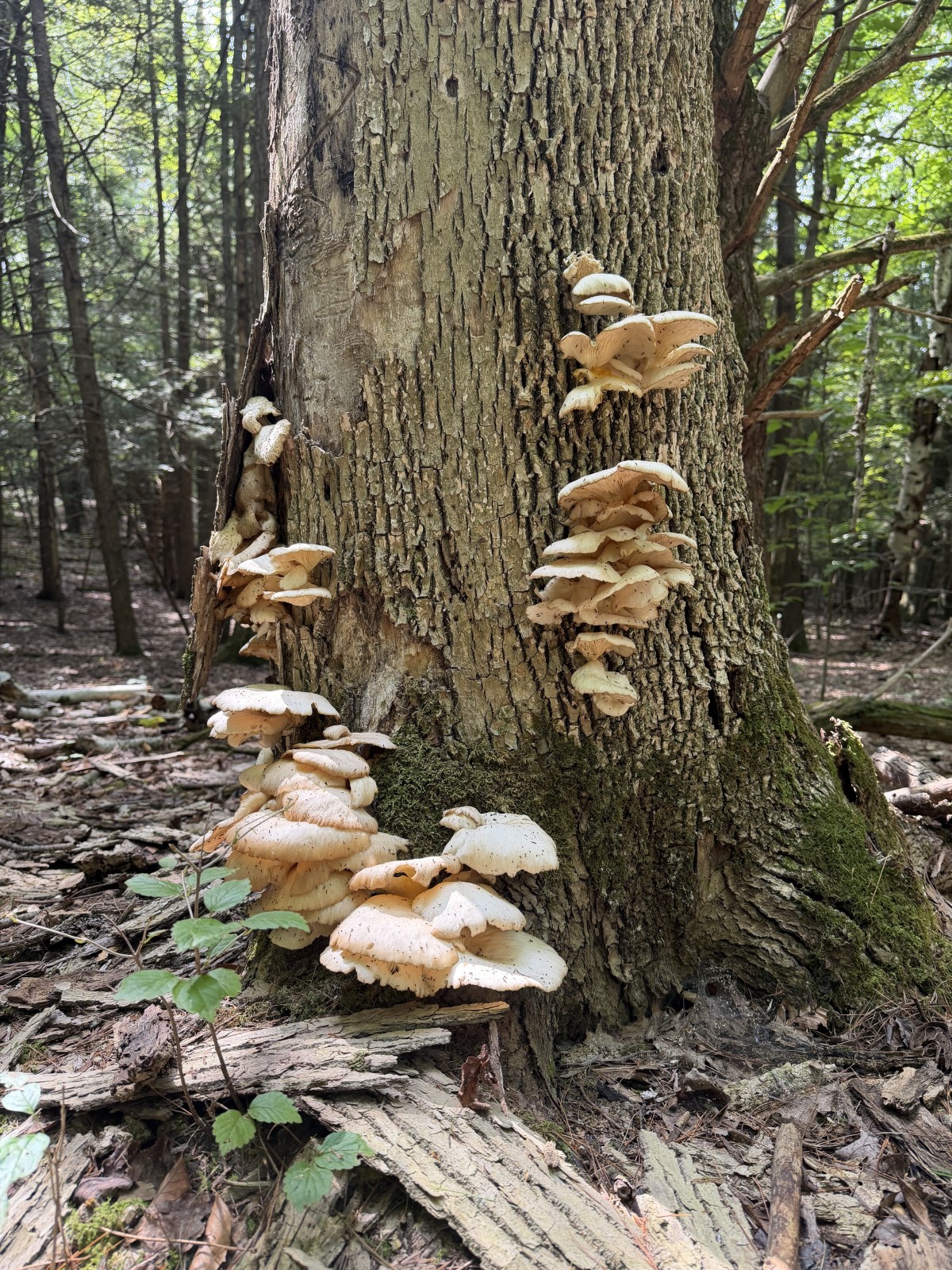
This morning, the wind had a bite to it. Leaves rustled overhead, and the remaining goldenrod bent and swayed in the breeze. After a recent mowing, the Queen Anne’s lace had already risen again, its delicate white heads standing far higher than any of its field mates. At the forest’s edge, white snakeroot was blooming, and under the trees, the ground was thick with mast- acorns and pine cones, the winter stores our woodland neighbors will depend on.
The season turns its key, opening a door and inviting us to step through into the gold of autumn.
For generations, people have sensed a kind of magic in these turning points of the year. The equinox isn’t just an astronomical event. In older traditions, particularly across the British Isles, harvest fields weren’t simply productive land. They were places alive with presence, with spirits, with power. In parts of Scotland, the final sheaf of grain was sometimes treated as if it held something of the life of the field. It was carried home and preserved into winter. Kept through the dark months, it might eventually be fed to an animal, sometimes a pregnant mare or the oldest cow, as if to carry the life of one season forward into the next.
Long after such old customs had nearly slipped from memory, on this very day in 1792, Welsh bards gathered on Primrose Hill in London, desirous to experience a bit of that seasonal magic. They stood beneath the open sky, formed a circle of stones and observed what they called a “Solemn Bardic Day.”
And perhaps we too feel that pull. After all, it’s human nature to hope there’s more to this world than what we can ordinarily perceive.
There was a little evidence of that in the forest this morning. A tree that fell across one of our usual routes a few months ago forced walkers onto a shortcut I’d already been taking to avoid a chronically muddy section of trail. In remarkably little time, one set of footsteps followed another until what had once been undisturbed forest floor became an unmistakable path. A folk trail.
No one planned it. No one marked it. We simply walked, and the forest recorded our passing.
A little farther along the soft pine folk trail, I heard the familiar beep-beep-beep of a white-breasted nuthatch. I looked up to find him overhead.
And then something rather wonderful happened. Chickadees began arriving. Suddenly, I found myself encircled by a small flock perched in the branches above me. They weren’t merely passing through. They stopped, gathered around, seemingly as interested in observing me as I was in observing them. For a few moments, I simply stood among them, delighted and a little astounded by this unexpected visitation. It had never happened to me before.
Perhaps there is a perfectly ordinary explanation for why those chickadees chose that particular moment to gather around a solitary walker in the forest. Almost certainly there is. But our ancestors understood something that can be easy to forget. An explanation need not rob an experience of its wonder.
Tonight, the sun will cross an invisible line. The balance will tip. The nights will lengthen and another season will begin.
On a cold morning in the final hours of summer, surrounded by chickadees beneath the trees, I too experienced a little of that seasonal magic. So, what will you do to mark the equinox? Do yourself a favor. Head outside and see if you can find some seasonal magic of your own.